


Planting a wall of green is still the best way to screen out neighbouring views as well as to block noise from the road or highway. As a clipped hedge or just as an informal planting shrubs can be used for softening a view of a wall or for creating interest by using screening shrubs to create different rooms within your garden.
In this article we look at how to grow the best as well as some of our most popular shrubs here at Eckards.
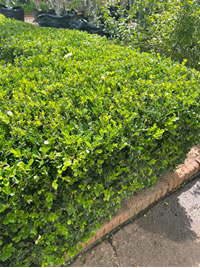 remains popular |
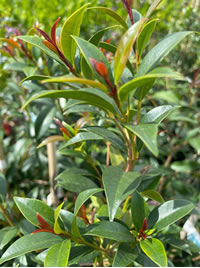 also called Lilypilly |
How to plant?
If you’re planting a low hedge which will only be up to a meter high then a single row where plants are spaced at 3 plants per linear meter is best or for a denser hedge a double row that is spaced in a staggered pattern, in this case 5 plants are needed per linear meter. For taller screening we recommend planting 3 plants for every 2.5m. A screening hedge will be in place for many years so a thorough ground preparation is essential to achieve the best from your new plants, the most rapid growth and in the long term. Prepare the soil with a liberal amount of compost to improve the soil condition. Each individual plant should bet some additional compost as it goes in along with BioRock plant starter. After planting feed the whole bed with BioGanic fertiliser and add a layer of mulch to help with moisture retention. Feed with BioGanic organic fertiliser pellets every eight weeks for the first year.
To prune or not to prune
It is best to keep trimming to a minimum until the hedge or screening shrubs are close to the desired height. This will enable the plants to put on as much growth as possible. After planting pinch back some of the new growth to induce lower branching.
For second-year trimming, straight sides will do with manual hedge shears. Once the plants are close to the planned height cut the tops back to a few inches below the ultimate level. This is best done around mid-summer. Then trim to shape in July or August each year.
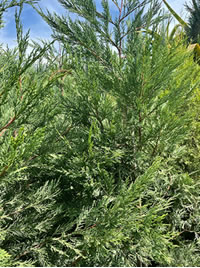 grow tall |
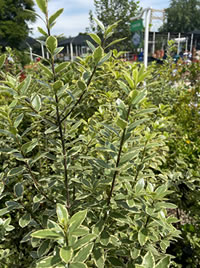 to around 5m high |
Grow the best
Choosing the best plants for a hedge boils down to what works best for a particular landscape and needs of a plant. Eckards has a few favourites as always but there are many options to suit your garden.
Brush Cherry
One of the most versatile as they can be used as a low to medium hedge or left as a small narrow tree that will grow to about 10m high, creating a solid screen. One of the advantages is that they are not very wide so are ideal in small space where you need height. If the are not pruned regularly they get a white flower and a pink berry that attracts a lot of birds to the garden.
Classic English Boxwood
One of our long time favourites to be used as a border or low hedge is the Buxus. Boxwood only requires well-drained soil and will grow in most situations in shade to full sun as a fine textured evergreen shrub that tolerates pruning shearing well.
Boxwoods are traditional favourites in formal landscape design because they are compact plants, are amenable to trimming, and bear dense, attractive foliage. This combination of qualities makes them a solid choice for short, formal hedges.
Pittosporum
Our most often suggested screening shrub that does not need to be pruned is the Pittosporum or Cheesewood as they are sometimes called. Growing to between 4m and 5m high they are evergreen, quite fast and have a dainty appearance. The tops are not dense so it gives the illusion of light coming through the leaves which is very pretty.
Leylandii Conifers
The immensely tall, fast growing Leylandii conifer is well known as a dense but stunning privacy garden hedge.
The Leylandii is more commonly known as the Leyland Cyprus. It's a dark evergreen tree and can reach heights of 10 metres ideal for screening a double story next door and will only need trimming if you decide to top them. They do only have a lifespan of about 25years in Gauteng and do require some maintenance when they mature to keep them looking good.
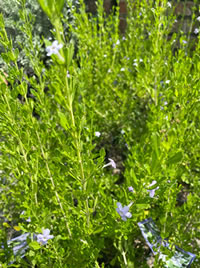 pollinators |
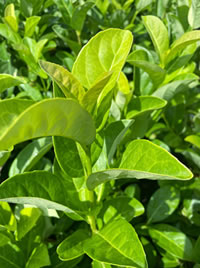 will grow fast |
Sweet Laurel Viburnum
One sees these all over our neighbourhood planted as medium height hedges but they also make for a great background shrub. Growing to about 3 meters high they can easily be used to screen off noise as well as nosy neighbours. Their bright green new leaves in spring and after pruning is what attract most to them as they always look fresh and healthy.
Freylinia Honeybell bush
As a medium to low hedge the indigenous Freylinia flowers through most of summer attracting a host of pollinators to the garden. Grow them to screen anything under 1.5m high in a mostly sunny spot. They don’t grow very wide only about 40cm so to screen with them you would need more than some of the other options available.